Real Location or Built Set: What Each Makes Possible
Real location or built set? Compare control, adaptation, and visual consistency to choose the screen environment that best serves your story.
Should you film at a real location or build a set? The choice changes how much of the environment a production can control, what it must adapt around, and how consistently it can appear on screen. A real location brings existing scale, surfaces, and traces of use; a built set lets the crew shape those elements around the camera and the story.
What does each option offer?
A real location is an existing place used as a filming environment, such as a working diner, an office, or a house. Its architecture and surrounding features arrive with it. A built set is a constructed environment, often on a soundstage or in another controlled space, designed for the scenes that will take place there.
The difference is not simply “real” versus “fake.” A location can be dressed or selectively altered for the production, while a set can be detailed to feel convincingly lived in. The useful distinction is how much of the environment already exists and how much can be designed specifically for filming.
Choose the option that supports the scene’s needs, not the one that sounds more authentic in the abstract.
How much control do you need?
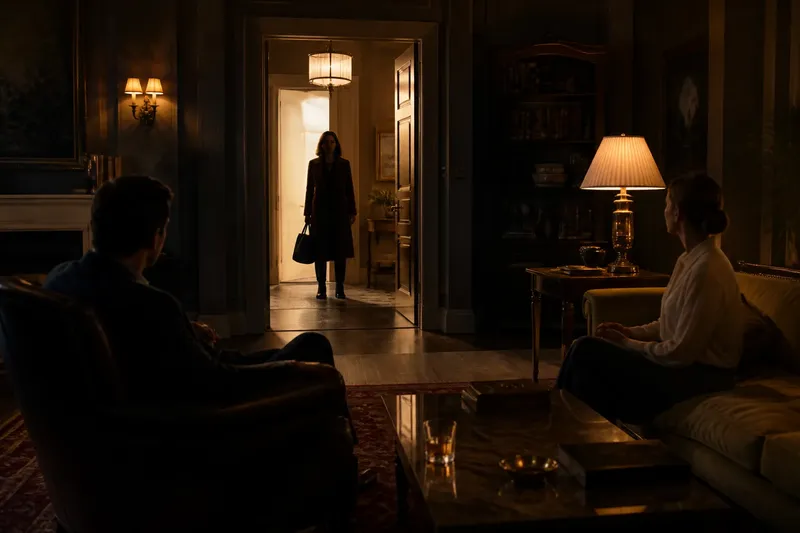
A built set offers greater control over the elements inside the filming area. The production can plan wall positions, doorways, windows, finishes, and sightlines around the camera. If a scene requires a character to cross from a kitchen into a hallway while another watches from a landing, the space can be laid out to make that blocking clear.
Control matters especially when a scene needs repeated setups, particular camera angles, or a wall that must move aside for a shot. A set can also be designed around lighting equipment, microphones, and crew access. These choices can make a scene easier to film, though they require the design team to anticipate what the camera will reveal.
A real location places limits on those choices. A narrow corridor stays narrow; a window may face the wrong direction; a built-in counter may prevent the camera from reaching a useful angle. The crew can sometimes adjust furniture, conceal unwanted details, or choose a different angle, but the architecture remains a partner in the scene rather than a blank canvas.
List the scene’s essential camera positions before deciding whether existing walls will work.
What must be adapted?
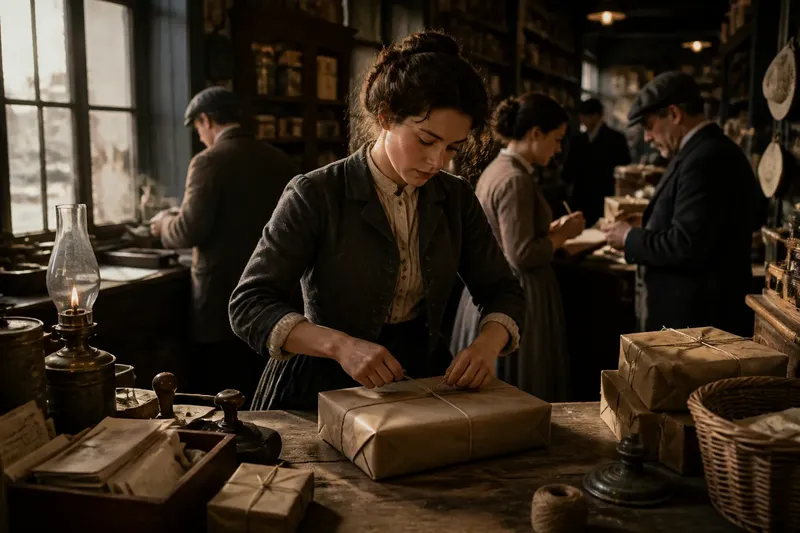
At a real location, adaptation usually begins with selecting what to show. A production might frame out a modern sign, rearrange movable furniture, or use a particular corner while leaving the rest of the building unseen. The location’s existing details can save design work when they suit the story, but mismatched features may call for dressing, concealment, or a different filming plan.
A built set reverses that emphasis: instead of adapting the scene to an entire place, the design team builds the portion of the world the scene needs. A hallway might end just beyond the camera’s view, or a room might include a removable wall. Such choices can keep the construction focused, but they demand careful coordination so the edges and implied spaces still feel coherent.
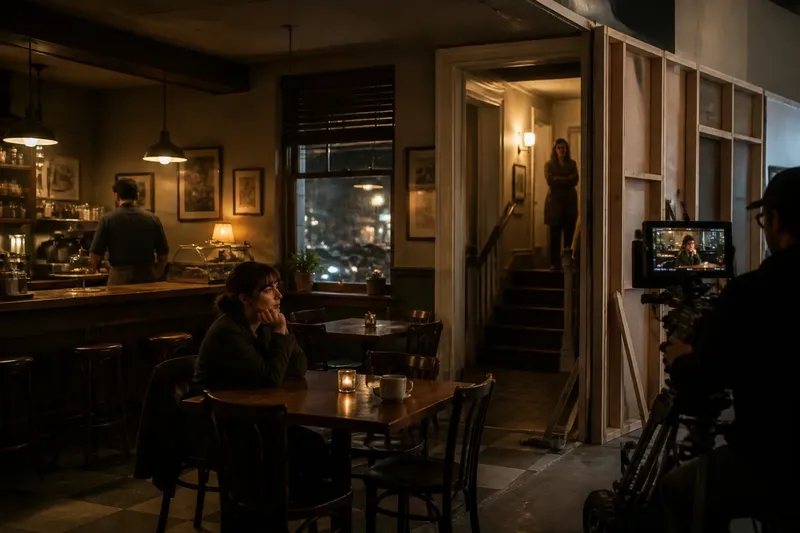
Say a fictional production needs a modest neighborhood café where a character returns to the same table in several scenes. The team might use an existing café if its fixed counter and windows support the chosen views, then adjust movable chairs and frame out a contemporary menu board. If the story requires the camera to pass through a wall or see the table from several otherwise impossible angles, a purpose-built café set could make those views easier to maintain.
How do you keep the look consistent?
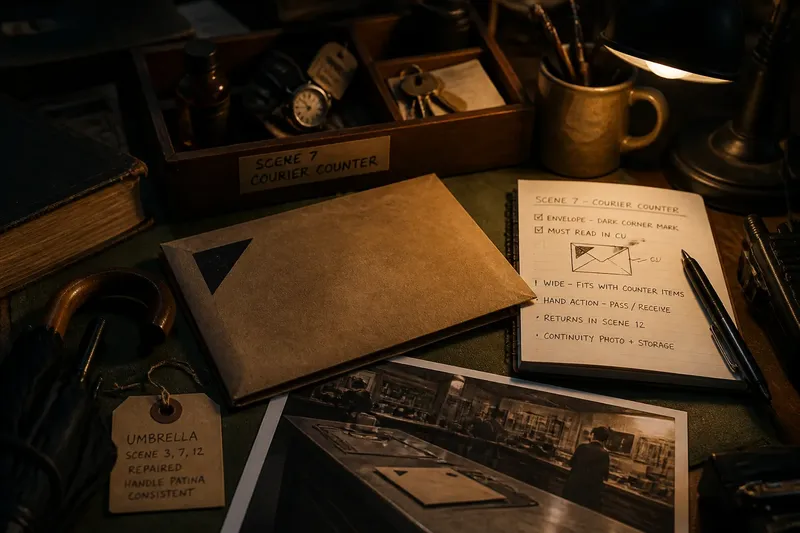
A built set can help maintain visual consistency because its surfaces, layout, and lighting conditions can be controlled across scenes. The production can keep the same wall finish, furniture arrangement, and window treatment in place, then return to the environment as needed. That control is useful when the story revisits a setting or when several shots must appear to belong to one continuous space.
Real locations can also support consistency, but changing conditions need attention. Daylight shifts, weather alters the exterior, and a functioning venue may have to return to its ordinary use between filming periods. Production design can track movable dressing and camera views, while the schedule and chosen angles can help limit visible variation.
Consistency is not just matching decor. It also means preserving the spatial logic that viewers have already seen: where a door leads, which side of a room holds the window, and how characters move between areas. A set offers more room to establish that logic deliberately. A location offers a preexisting one that the crew must understand and use.
Which choice fits this scene?
The decision depends on what the environment must do for the story. A real location may suit a scene that draws meaning from a recognizable kind of place, its natural wear, or its surrounding streets. A built set may suit a scene whose camera movement, layout, or repeated visual details call for more control.
Compare the options against practical questions:
- Camera access: Can the planned shots fit around fixed walls, windows, and furniture?
- Visual identity: Do existing surfaces and details support the story’s intended world?
- Repeated scenes: Can the environment look and feel consistent whenever the story returns?
- Adaptation: Can unwanted features be framed out or changed without undermining the scene?
- Spatial demands: Does the action need openings, sightlines, or movement that the existing architecture cannot provide?
When the answers point in different directions, consider a hybrid approach: film in a real building for its exterior or public areas, then build a matching interior where the story needs more camera access. Matching visible materials, colors, and architectural cues can help the two spaces read as one place, but the design must account for differences in light and perspective.
What should you ask first?
Can a real location be changed for filming?
Often, movable dressing can be adjusted, but fixed architecture and site rules limit what can change. Ask what may be moved, covered, or altered before shaping the scene around those possibilities.
Does a built set need a complete building?
No; a set can include only the areas the camera and performers need. The design should still make unseen extensions believable through consistent doorways, sightlines, and room relationships.
Can a production combine both options?
Yes, a real exterior can lead into a constructed interior, or a location can supply selected scenes while a set handles others. Shared visual details help the audience accept the spaces as parts of the same world.
Which option is better for a story?
Neither is automatically better: the right choice depends on how the scene uses its surroundings and how much control the images require. Start with the necessary camera views and story details, then see whether an existing place can support them.
For a real location or built set, the most useful first decision is to separate what the story truly needs from what would merely be convenient. That distinction helps the production preserve a place’s character where it serves the scene and create control where the scene demands it.